A sudden protest by Central Railway staffers at Chhatrapati Shivaji Maharaj Terminus brought service to a grinding halt, sent commuters into a tizzy, and eventually caused the loss of two lives in Mumbai’s suburban railway network-the so-called lifeline of the city. The incident has brought into sharp focus the precarious balance between labor grievances and commuter safety in one of the world’s most densely used public transport systems during peak evening hours.
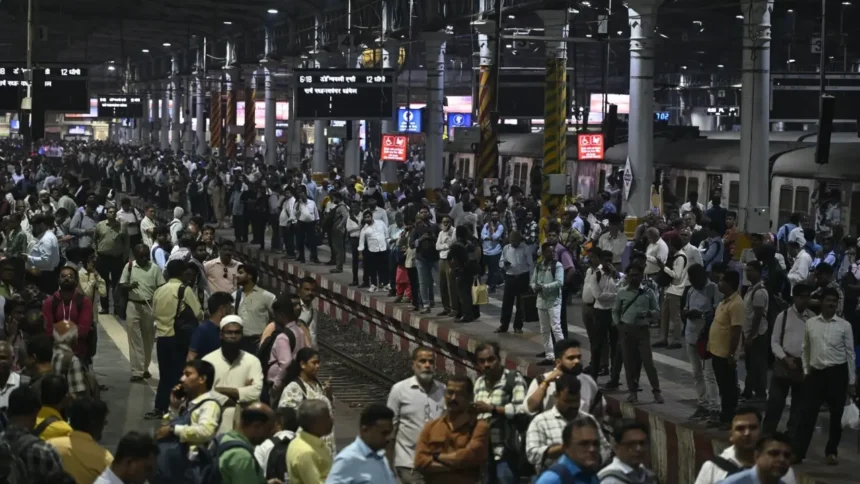
It all began when a section of motormen and other railway staff began a sudden protest at CSMT around early evening. It is said that the protest was related to demands over working conditions and staffing concerns, though the official details are still under review. As soon as the protest began, all trains stopped running with minimal advance notice. Thousands of commuters were caught unaware by the sudden suspension of services, many already en route or waiting on platforms during high-volume rush hour.
The sudden stoppage soon caused crowding on the station platforms and in trains stalled between stations. As the crowds’ frustration and irritation rose, a number of commuters started trekking the tracks near Sandhurst Road Station towards other lines to head home or board other routes. This always fraught decision-though a common occurrence in Mumbai’s pressured rail network-turned disastrous as a down fast local train traversed the section. The train mowed down a crowd walking on the tracks, killing two and injuring three. A 19-year-old commuter girl, whose name is being withheld as her relatives are yet to be informed, was one among those dead.
Emergency services reacted immediately as the injured were taken to nearby hospitals. However, the shockwaves of the incident resounded on social media and city news channels with citizens voicing grief, anger, and a growing sense of vulnerability over railway safety protocols.
The tragedy immediately brought questions of responsibility and communication into focus. Mumbai’s rail system heavily depends on real-time coordination, and even minor disruptions result in surges of crowds. In this case, the lack of advance warning and strategies for crowd management increased the risks. While protest by workers is a legitimate mechanism for raising grievances, experts argue that there is a need for structured negotiation frameworks in essential services to avoid any hazard to public safety.
Railway unions, on the other hand, insist that the protest began over decades of problems like shortages in staffing, extended duty hours, and insufficient relief, adding that their own demands for talks were ignored, which led to the flare-up. Public opinion, nonetheless, seems to suggest minimal sympathy for life-risking disruptions, not least because Mumbai commuters face massive crowding in normally competitive times of day.
Authorities have ordered a formal inquiry to establish the exact sequence of events, lapses in decision-making, and if safety measures were compromised. The Central Railway administration issued statements extending condolences to the families of those who died and assured stern action if negligence is proved. There is also likely to be a push for better communication mechanisms, like real-time advisories, crowd control personnel deployment, and emergency evacuation procedures to avoid the recurrence of such an incident.
The incident also raises wider systemic questions about Mumbai’s transport infrastructure: besides being operational and efficient, the system has to cope with human behavior under stress when millions rely on local trains each day. It underlines the necessity for sustainable labor policies, commuter awareness drives, enhanced platform management, and perhaps more investment in modernized signaling and monitoring systems.
And as Mumbai mourns the loss of innocent lives, the incident stands as a stark reminder that urban systems of this scale require resilience not only in operations but also in policy, negotiation, and empathy. The challenge now remains to balance the rights of workers with the safety of the public; that protest, when necessary, would never again be the catalyst for avoidable loss.
This tragedy could be the turning point toward a safer and more humane commuting environment, if properly addressed. If it is allowed to be ignored, however, it will join that long and painful list of preventable Mumbai rail accidents.
Commuter Tragedy Amid Rail-Staff Protest in Mumbai Raises Safety and Accountability Concerns

Leave a Comment