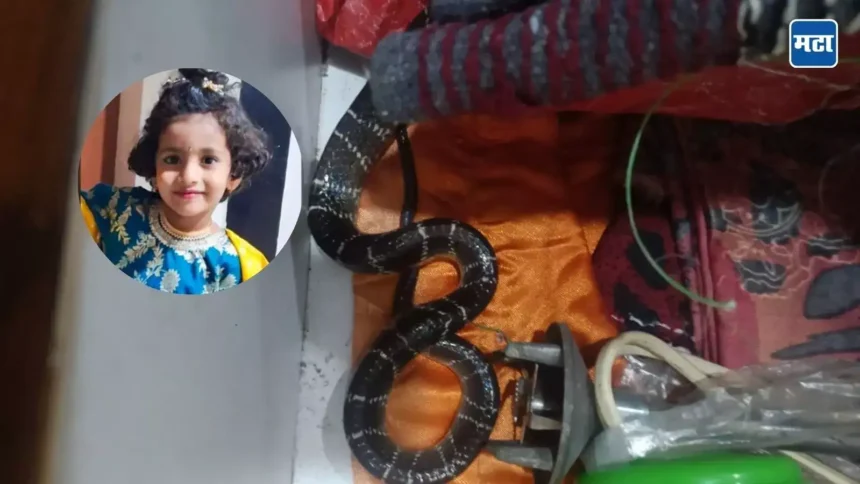
Dombivli, September 30, 2025 – Tragedy struck in Dombivli when a four-year-old girl succumbed to injuries after being bitten by a snake at the house of her aunt, with the aunt too remaining in critical condition. The tragic scene has shaken the people and once again brought to the fore the pressing need for snakebite awareness, preventive measures, and swift medical intervention to such incidents in suburban Maharashtra.
The Incident
The dead child was Pranavi Bhoir, who had visited her aunt Shruti Thakur to stay overnight. Both the child and her aunt were reportedly bitten by a snake late at night. The child, being too young to be able to express fully that she was distressed, is said to have silently struggled, while Shruti did not know what had happened until she was bitten as well.
The family hurried both victims to Kalwa’s Chhatrapati Shivaji Maharaj Hospital in Thane. Unfortunately, Pranavi was found dead upon arrival despite the life-saving efforts of the doctors. Shruti, 24, was taken into intensive care and is continuing to be given life-saving treatment. Doctors have termed her condition as “serious but stable,” and she is still being monitored closely.
Shock and Grief
The untimely death of the child has shocked the neighborhood into mourning. People from Dombivli called the incident a “nightmare” no family would ever have to face. Most people congregated outside the hospital to offer their condolences to the family, as others worried about how snakes still find their way into homes in spite of urban development at a fast pace and the availability of civic authorities.
Relatives remembered Pranavi as a happy and naughty child who had only begun school. The family, distraught at the loss, has kept quiet but is reported to be asking for more vigilance and preventive action so that no other family has to suffer such a loss.
Snakebites in India: A Silent Killer
This case is one of a broader public health issue in India. India is responsible for almost half of the world’s snakebite fatalities, and there are thousands of deaths annually, mostly in rural and semi-urban regions. Maharashtra, among other states such as Uttar Pradesh, West Bengal, and Odisha, has some of the highest numbers.
Snakebites tend to go unreported, and victims often use folk remedies or get delayed into hospitals, drastically curtailing survival rates. Even in urban areas such as Thane and Mumbai Metropolitan Region, where there are hospitals, unawareness and non-availability of first aid in emergencies make the situation catastrophic.
Reasons for Increased Incidence
Experts observe that the fast growth of population in places such as Dombivli, Kalyan, and Navi Mumbai has resulted in the reduction of natural habitats of snakes. Construction work, uncared-for waste, and open drains invite rats that push snakes towards residential areas. Floodwater during monsoon season further promotes such encounters because it pushes snakes into buildings and homes.
Shruti’s house, located near a green patch, was reportedly prone to such incidents, though the family had not anticipated such a deadly encounter.
Preventive Measures and Awareness
Following this incident, local health authorities and NGOs have reiterated simple but critical preventive measures:
Avoid sleeping on the floor in areas known for snakes.
Seal holes, cracks, and open drains around residential spaces.
Use protective footwear when walking outdoors at night.
Maintain the environment clean and rodent-unfriendly free from piles of waste.
When bitten, physicians highly recommend remaining calm, immobilizing the limb, not using the conventional methods of cutting or sucking the wound, and going straight to the nearest hospital with anti-venom.
Hospital Readiness and Criticism
Though physicians at Kalwa Hospital moved quickly, activists remind us that smaller hospitals in Dombivli seldom have anti-venom stock and trained staff to deal with emergency situations. This leaves a perilous time lag between the bite and treatment.
Civic activists have called for upgrading emergency snakebite facilities, particularly in suburban belts where such encounters are frequent. They also demanded public awareness campaigns to make families aware of first aid and precautionary measures.
Community Response
Locals have also started discussing the establishment of vigilance groups to warn families during the monsoon. Volunteers for snake rescue, who commonly assist in relocating snakes from buildings and houses, also stressed that there is a need for more training sessions at the community level.
This tragedy would not have occurred had awareness levels been better. Even now, people panic and lose valuable time in a state of confusion. With a snakebite case, every minute counts,” said a worker with Thane’s animal rescue teams.
The passing away of young Pranavi and the hospitalization of her aunt are stark reminders of the threat of snakebites in suburban India. Apart from individual loss, the accident points to institutional loopholes in awareness, infrastructure, and emergency response.
As Shruti fights for her life, the accident has brought residents together in calling for action from the authorities. For the mourning family, however, nothing can replace the loss of their precious child.
The tragedy is both a wake-up call and call for action — to provide better safety, quicker medical readiness, and an informed and prepared community to meet such unexpected hazards.